
Rubber Plant Leaves Drooping, Falling or Curling? Fix It
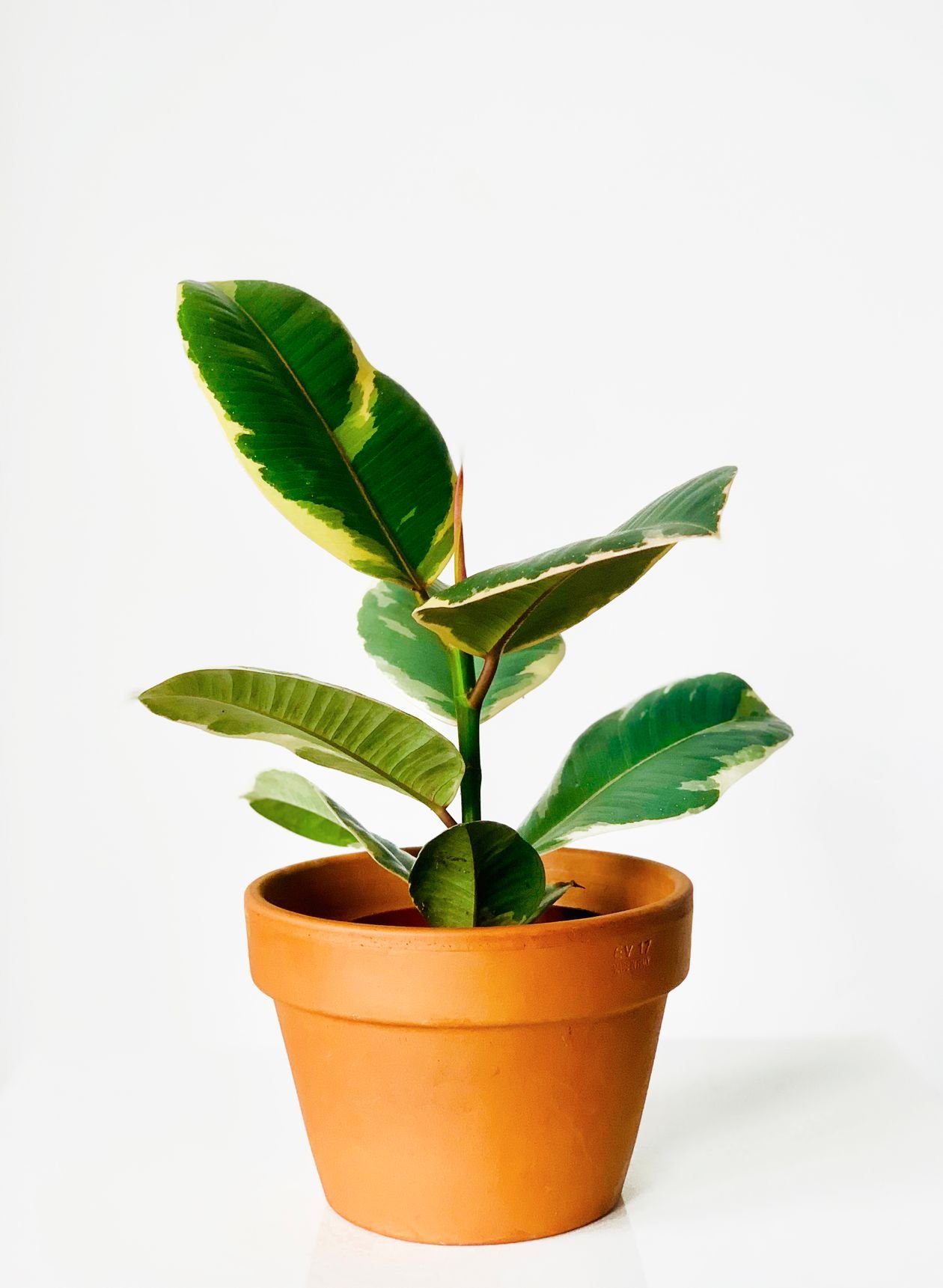
The rubber plant (Ficus elastica) is famous for its big, glossy, almost artificial-looking leaves — so when those leaves start drooping, falling, or curling, it shows immediately. The tricky part: rubber plants react to three different symptoms with three different causes. This guide splits them apart so you can match your plant’s exact behavior to the right fix.
Symptom 1: Rubber Plant Leaves Drooping
Overwatering (soft, yellow, droopy)
The most common cause of rubber plant leaves drooping. Overwatered leaves feel soft and limp, often turn yellow from the bottom up, and the soil stays damp for days. The North Carolina Extension notes that overwatering can cause leaf loss in rubber plants, and recommends watering regularly but avoiding waterlogged soil. Let the top 2 inches of soil dry out before watering again.
Underwatering (dry, crispy, droopy)
Underwatered rubber leaves droop too — but they feel dry and papery, and the edges turn brown and crispy. The whole plant may look dull. A deep, thorough watering perks it back up within hours, which is the telltale sign: if it revives fast after water, thirst was the problem.
How to tell the difference
- Soft + yellow + wet soil → too much water. Stop watering, improve drainage.
- Dry + crispy edges + dry soil → too little water. Soak thoroughly.
Our overwatered vs underwatered guide has the full side-by-side test, and the general drooping leaves guide covers the same symptom across all houseplants.
Symptom 2: Rubber Plant Leaves Falling Off
Sudden environmental change
Rubber plants are creatures of habit — the NC State Extension specifically notes they “prefer to remain in one location and do not do well with drafts or cold temperatures.” Moving the plant to a new room, a cold draft from a window or AC vent, or a sudden drop in light can trigger dramatic leaf drop within days. The leaves often fall while still green.
Low light over time
A rubber plant slowly starved of light sheds its lower leaves one by one to conserve energy. The RHS recommends growing Ficus elastica in bright but filtered or indirect light. If your plant is several feet from the nearest window, light is likely the issue.
What to do
- Put the plant in its final spot — bright indirect light, no drafts — and leave it there.
- Don’t panic-fertilize or repot; a stressed plant needs stability, not more changes.
- Expect the drop to stop within 2–3 weeks once conditions stabilize. New growth follows.
For more on this pattern, see why plant leaves fall off.
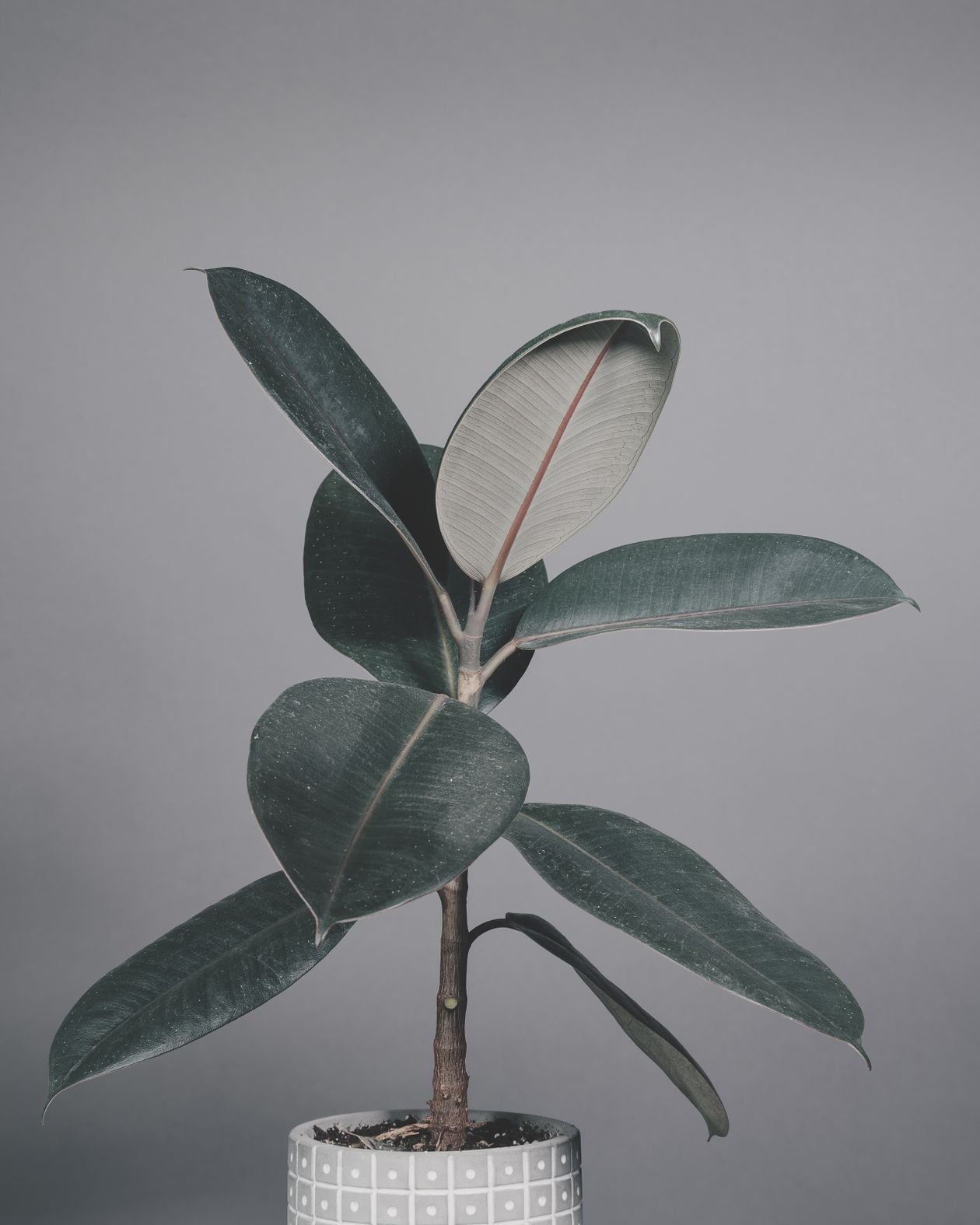
Symptom 3: Rubber Plant Leaves Curling
Low humidity and dry air
Rubber plants are tropical — in dry indoor air (especially with winter heating), leaf edges curl inward to reduce moisture loss. If the curling comes with brown crispy edges, dry air is the prime suspect. Group plants together, use a pebble tray, or run a humidifier nearby.
Pests (check the undersides)
Spider mites, scale, and mealybugs all cause curling, stippling, and sticky residue. Flip the leaves over and look closely — spider mites leave fine webbing and tiny dots; scale looks like small brown bumps. Wipe leaves with a damp cloth and treat with insecticidal soap or neem oil.
Heat stress
A rubber plant too close to a radiator, heating vent, or hot sunny window will curl its leaves away from the heat. Move it back a few feet and the new growth comes in flat.
The full curling diagnostic is in our guide to curling leaves.
Bonus: Cleaning Dull Rubber Plant Leaves
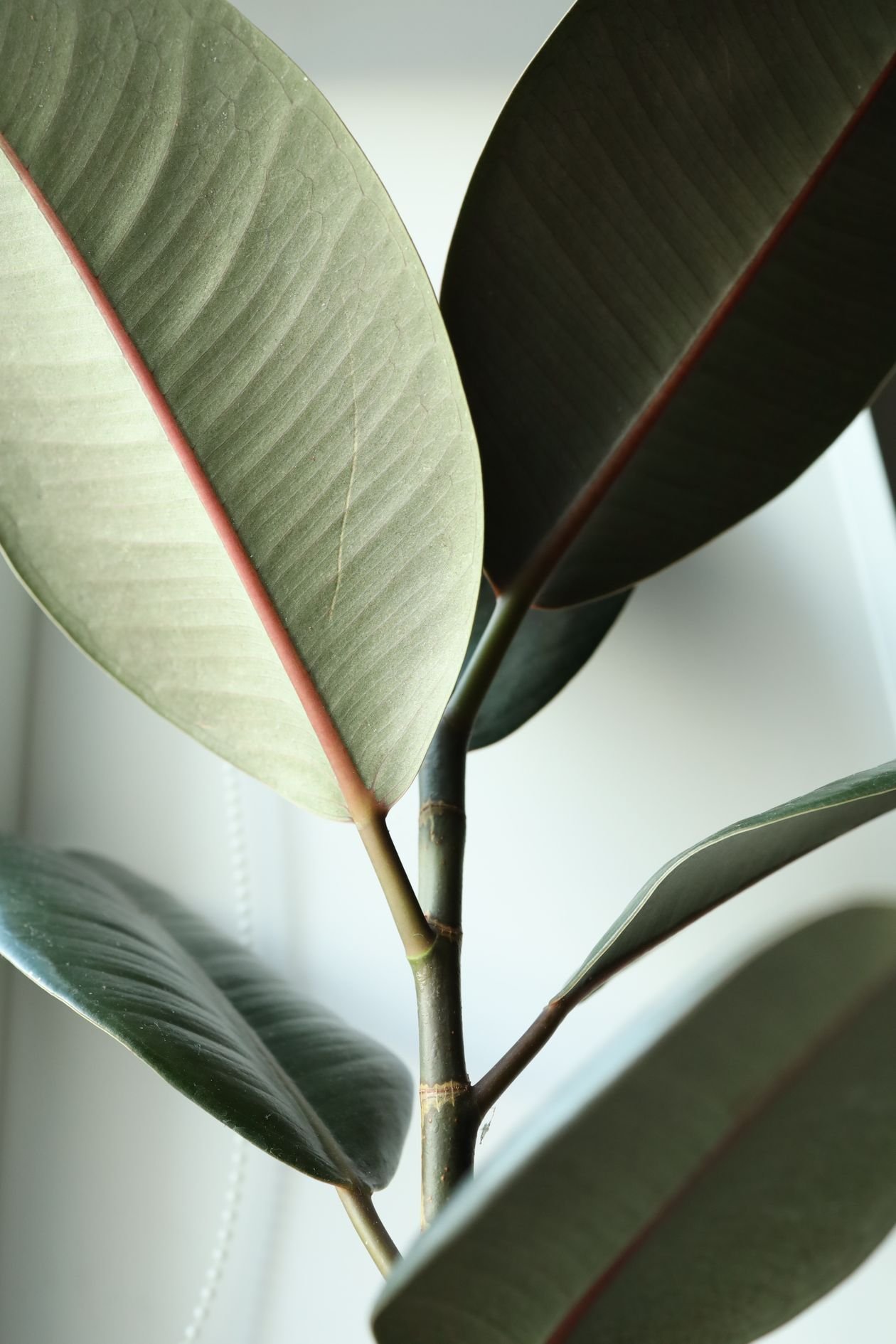
Rubber plant leaves are dust magnets — and dusty leaves can’t photosynthesize properly, which weakens the plant over time. Wipe each leaf with a soft, damp cloth every few weeks (the NC State Extension recommends exactly this). For extra shine, our leaf-shine guide covers safe methods — skip the olive oil and commercial leaf-shine sprays, which clog the leaf pores.
Rubber Plant Care Cheat Sheet (Prevention)
- Light: bright indirect light; tolerates some gentle morning sun.
- Water: when the top 1–2 inches of soil are dry; less in winter.
- Humidity: average room humidity is fine; 40%+ is ideal.
- Temperature: 60–75°F (15–24°C); no cold drafts, no heat blasts.
- Stability: pick a spot and commit. Rubber plants punish frequent moves.
- Feeding: balanced liquid fertilizer monthly in spring/summer only.
Rubber Plant Varieties: Do They Behave Differently?
The classic dark-green Ficus elastica ‘Robusta’ is the toughest of the bunch. But the popular varieties have slightly different needs worth knowing:
- ‘Burgundy’ / ‘Black Prince’: near-black leaves need more light than the green type to keep their color — in dim spots they fade to dull green and drop lower leaves faster.
- ‘Tineke’ and variegated types: the cream-edged leaves have less chlorophyll, so these are slower-growing, need brighter light, and are more prone to brown edges in dry air.
- ‘Ruby’ / pink-variegated: the fussiest — needs bright indirect light to hold its pink tones; new pink leaves scorch easily in direct sun.
The drooping, falling, and curling fixes in this guide apply to all varieties — just give variegated types a brighter spot and be extra careful with their watering, since their smaller energy reserves mean slower recovery.
When to Repot a Struggling Rubber Plant
Repotting is stressful, so don’t do it as a first response to drooping or leaf drop. Repot only when you see clear signs the pot is the problem: roots circling densely at the drainage holes, water running straight through without wetting the soil, or soil that stays soggy for a week because it’s broken down and compacted. The best time is spring, at the start of the growing season. Go only one pot size up, use fresh well-draining houseplant mix, and water lightly for the first two weeks while roots settle. A freshly repotted rubber plant may drop a leaf or two in protest — that’s normal; stability returns within a month.
FAQs: Rubber Plant Leaves Drooping, Falling or Curling
Why is my rubber plant dropping leaves after I moved it?
Rubber plants react badly to relocation — new light levels, drafts, and temperature shifts all trigger leaf drop. This is normal and temporary. Keep conditions stable, don’t repot or fertilize, and the drop should stop within 2–3 weeks as the plant acclimates.
How do I know if my rubber plant needs water?
Stick your finger 2 inches into the soil. Dry? Water deeply until it drains out the bottom. Damp? Wait a few more days. Rubber plants would rather be slightly dry than slightly wet — when in doubt, wait.
Why are my rubber plant leaves curling inward?
The most common reasons are dry air, underwatering, or pests (spider mites, scale). Check the leaf undersides for pests first, then raise humidity and make sure your watering is consistent. New leaves should unfurl flat once conditions improve.
Should I mist my rubber plant?
Misting gives a brief humidity boost but it evaporates in minutes — it won’t fix chronic dry air. A pebble tray or humidifier works far better. Wiping the leaves with a damp cloth does more good than misting ever will.
Can a rubber plant recover after losing most of its leaves?
Yes, if the stems are still firm and the roots healthy. Prune back leggy stems just above a leaf node in spring — this encourages branching and the plant bushes out again. Keep light bright and watering steady, and be patient: recovery takes a full growing season.
Leave a Reply