
Dull Leaves? How to Make Plant Leaves Shiny (Safely)
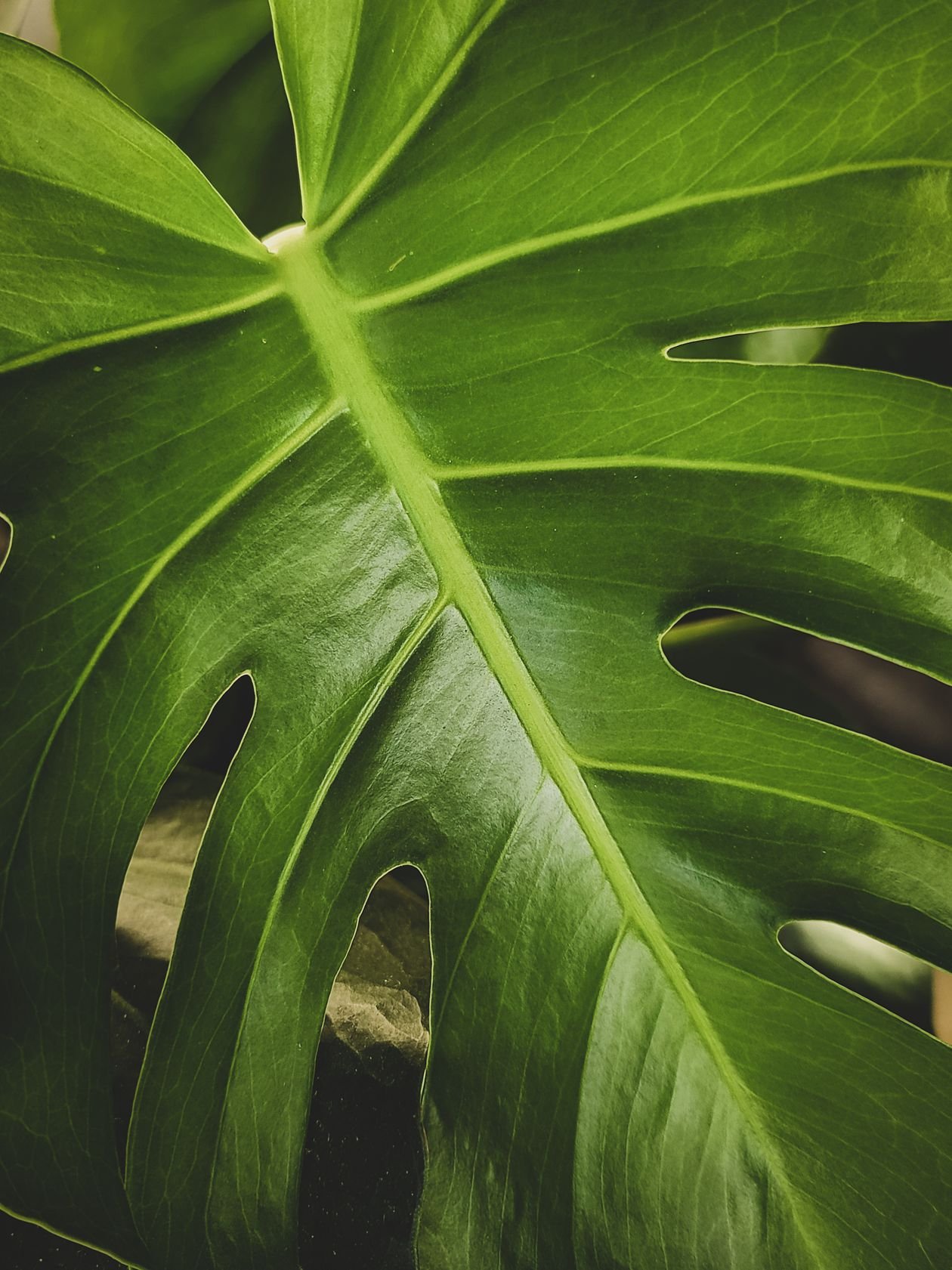
There’s nothing sadder than a houseplant that should look lush but doesn’t. The leaves are green, the plant is alive — yet everything looks flat, dusty, and tired. If you’re wondering how to make plant leaves shiny again, you’re asking one of the most common houseplant questions there is — and the good news is that the fix is usually simple.
Dull leaves are rarely a death sentence. Most of the time they’re just dirty, or growing in conditions that don’t let them glow. In this guide, you’ll learn exactly why leaves lose their shine, the safe methods that actually work (including a homemade leaf-shine recipe), and what to avoid — because some popular “shine hacks” do more harm than good.
Why Do Plant Leaves Go Dull?
Before reaching for any product, it helps to know why your plant looks dull. Shine is just light reflecting off a smooth, healthy leaf surface. Anything that roughens or coats that surface kills the glow. Here are the usual suspects:
- Dust buildup. The number one cause. Indoor air deposits a fine film of dust on every leaf, and that film blocks light. Iowa State University Extension notes that cleaning houseplants “improves their appearance, stimulates growth, and may help control insects and mites.” A dusty leaf literally can’t photosynthesize as well.
- Hard-water spots. If you mist or shower your plants with hard tap water, minerals dry into white, chalky deposits. The Royal Horticultural Society points out that “overhead watering with (hard) tap water can leave noticeable calcium deposits” on leaves.
- Low light. Leaves in dim corners grow thinner and paler, with less of the waxy coating that gives healthy foliage its sheen.
- Pests and honeydew. Sap-sucking insects like scale and mealybugs leave behind sticky honeydew that dries into a dull, sometimes sooty film.
- Fertilizer or spray residue. Foliar feeds and hard-water misting can leave a hazy residue.
- Natural aging. Older, lower leaves lose gloss as the plant redirects energy to new growth. That’s normal — not every old leaf can be saved.
Once you know the cause, the fix is straightforward. Let’s start with the methods that are always safe.
How to Make Plant Leaves Shiny: The Safe Methods
Rule of thumb: clean first, shine second. No shine product works well on a dirty leaf — you’d just be polishing the dust. Work through these methods in order.
1. The Damp Cloth Wipe (Safest — Start Here)
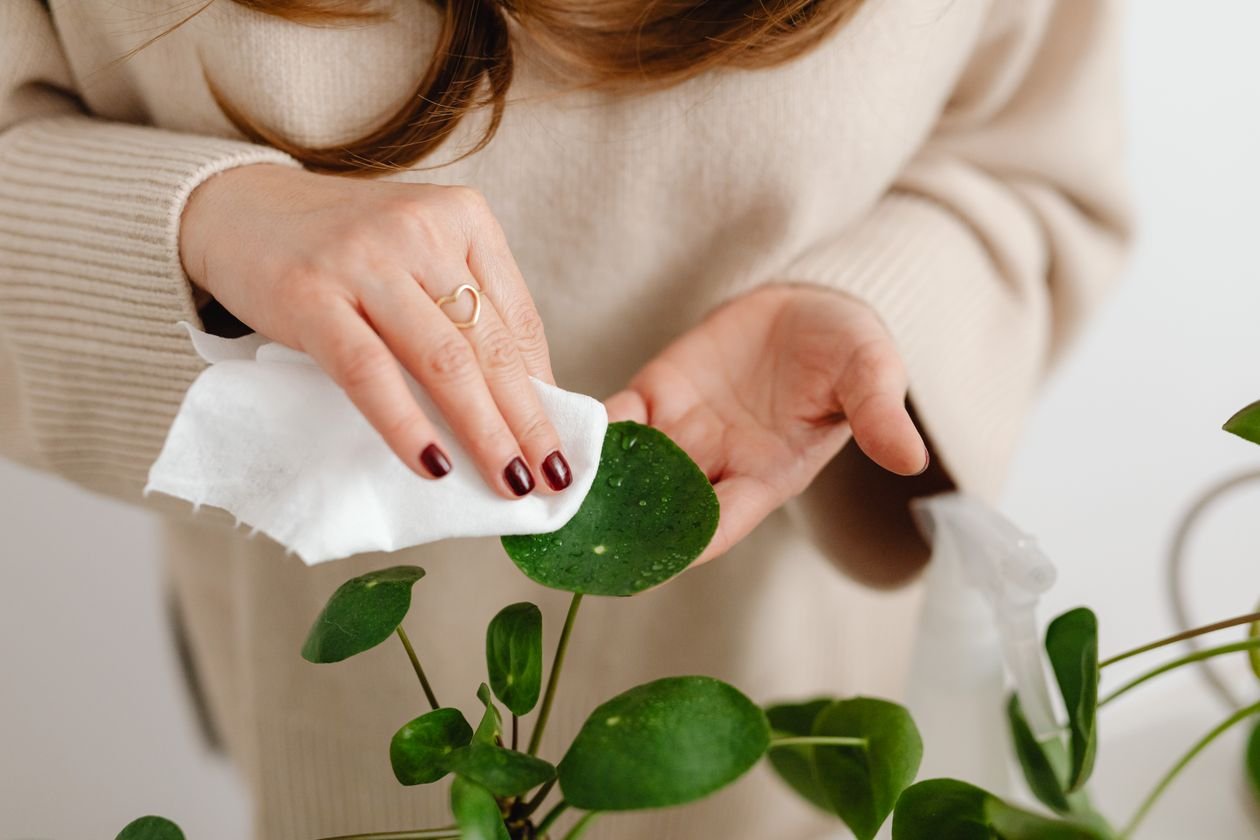
This is the method plant experts recommend first, and for most plants it’s all you’ll ever need. Iowa State University Extension confirms that “in nearly all cases, a cloth with clear water effectively cleans dust and has no potential to damage leaves.”
Here’s how to do it right:
- Dampen a soft cloth, microfiber towel, or sponge with lukewarm water (cold water can shock tropical leaves).
- Support each leaf from underneath with one hand — this prevents tearing, especially on large leaves like monstera or rubber plant.
- Wipe gently from stem to tip, top side first, then the underside where pests hide.
- Rinse the cloth when it gets dirty and keep going. You’ll be amazed how much grime comes off.
2. The Shower Method for Deep Cleaning
If a plant is seriously dusty or has hard-water spots, a shower works better than wiping. Place the plant in the bathtub or sink and spray the foliage with lukewarm water at gentle pressure. Angle the spray so water runs off the leaves rather than blasting the soil.
This method also dislodges spider mites and aphids hiding under leaves — a nice bonus. Cover the soil with a plastic bag if you’re worried about overwatering, and always check the drainage hole afterward.
3. Milk Solution for Gentle Shine
Here’s a classic houseplant trick that actually works: mix one part milk with ten parts lukewarm water, dampen your cloth in it, and wipe the leaves. The proteins in milk leave a subtle, natural sheen — nothing dramatic, just a healthy glow.
Use skim or low-fat milk (less residue), wipe with a clean damp cloth afterward to remove any film, and skip this on fuzzy-leaved plants like African violets. It won’t harm the plant, but don’t expect a mirror finish — that’s not the goal.
4. Neem Oil for Shine + Pest Protection
Neem oil is the closest thing to a two-in-one product: it adds a light shine and helps deter common pests like spider mites and mealybugs. Mix 1 teaspoon of cold-pressed neem oil + a few drops of mild liquid soap in 1 liter of lukewarm water, shake well, and mist or wipe the leaves.
- Always test on one leaf first and wait 24 hours.
- Apply in the evening or away from direct sun — oil + sunlight can scorch leaves.
- Don’t use it on every watering; once a month is plenty.
5. Homemade Leaf-Shine Spray Recipe
Want a ready-to-spray bottle? Here’s a simple, safe recipe:
- 1 liter lukewarm water
- 1 teaspoon cold-pressed neem oil
- 3–4 drops mild liquid castile soap (helps the oil mix with water)
Shake well before each use, spray lightly onto a cloth (not directly onto the plant), wipe the leaves, and store the bottle in a cool, dark place. Use within a week — homemade mixes don’t have preservatives.
What NOT to Use on Your Leaves
The internet is full of shine “hacks.” Some are harmless but useless; others actively damage your plant. Here’s the honest breakdown.
Olive Oil and Coconut Oil: Risky
Olive oil is the most-shared leaf-shine hack online, and it’s also one of the riskiest. Cooking oils go rancid, turn sticky in warmth, and form a film that blocks the stomata. They also attract dust faster, so your leaves look dull again within days — plus a rancid oil smell. Coconut oil has the same problems. If you’ve already used oil, wipe the leaves down with a damp cloth and a drop of mild soap to remove it, then rinse.
Commercial Leaf-Shine Sprays: Use With Caution
Store-bought leaf-shine aerosols (like Miracle-Gro Leaf Shine) do make leaves glossy instantly. The catch: many are silicone- or petroleum-based, and repeated use builds up a layer that interferes with transpiration. If you use one, treat it as an occasional cosmetic fix for a special occasion — not a routine. Always spray onto a cloth, never directly onto the plant, and keep it away from flowers and new growth.
Vinegar: Only Heavily Diluted, Rarely
You’ll see vinegar recommended for removing hard-water spots. It can dissolve mineral deposits, but vinegar is an acid — on leaves it can burn tissue and strip the protective waxy cuticle, especially in sunlight. If you try it, use no more than 1 teaspoon of white vinegar per liter of water, wipe gently, rinse with plain water immediately after, and never use it on delicate or fuzzy leaves. Honestly? A damp cloth and distilled water does the same job with zero risk.
Banana Peels, Mayonnaise, and Other Kitchen Hacks: Skip
These leave sticky residues that attract dust and can encourage mold. Your plant doesn’t need a condiment — it needs a clean cloth.
How to Make Indoor Plant Leaves Shiny Naturally: The Maintenance Routine
Real, lasting shine isn’t about products — it’s about conditions. A healthy leaf shines on its own. Build this simple routine and your plants will glow without any sprays:
- Dust monthly. Add leaf-wiping to your watering day once a month. Dusty leaves can’t photosynthesize properly, so this is plant care, not vanity.
- Give enough light. Most foliage plants want bright, indirect light. A plant starving for light grows pale, thin leaves that never shine. Move it closer to a window gradually — sudden jumps into direct sun can scorch leaves.
- Water with room-temperature water. The University of Missouri Extension’s houseplant guide recommends keeping plants “moist but never soggy” and notes that proper watering is the single biggest factor in plant health. If your tap water is very hard, use filtered, distilled, or rainwater for misting to avoid those chalky calcium deposits.
- Boost humidity. Dry indoor air (especially with heating on) dulls leaves and browns their edges. Group plants together or set pots on a tray of damp pebbles.
- Feed lightly in growing season. A monthly half-strength balanced fertilizer from spring to early fall keeps new growth glossy. Never fertilize a stressed or dormant plant.
Follow this routine and you’ll find you rarely need any “shine” product at all — the leaves take care of the gloss themselves.
Dull Leaves on Specific Plants
Some plants show dullness more dramatically than others. A few notes:
- Rubber plant (Ficus elastica): Famous for its glossy leaves, so dullness shows fast. It’s usually dust or low light. Our rubber plant rescue guide covers drooping and falling leaves too, which often appear alongside dullness.
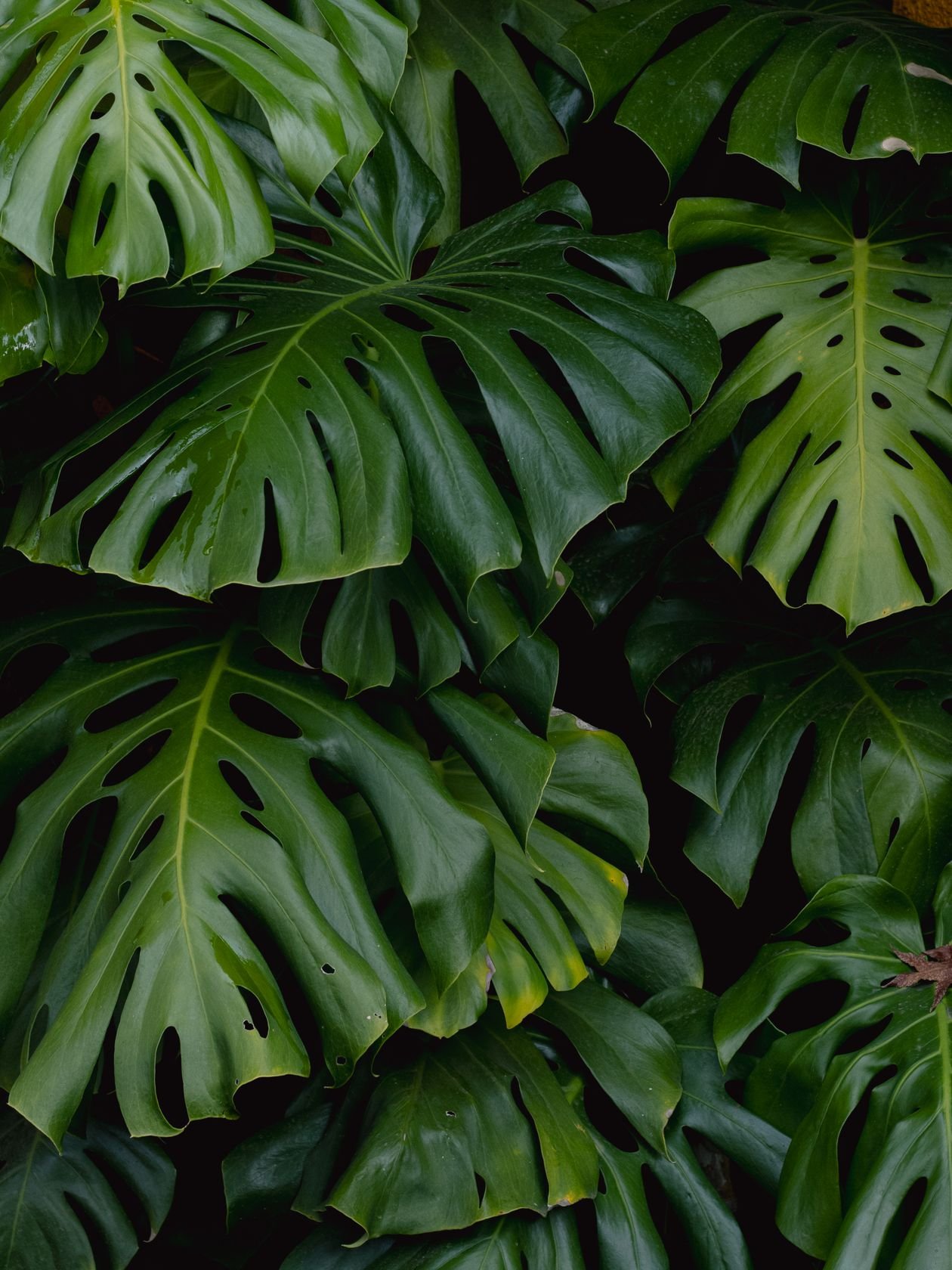
- Monstera: Big leaves are dust magnets. Wipe them monthly and keep the plant in bright, indirect light. If your monstera’s leaves are also yellowing, see our monstera yellow leaves guide.
- Money plant / pothos: Usually only dull from dust — a quick wipe brings back the shine. These are nearly indestructible, so dullness here is cosmetic.
- ZZ plant and snake plant: Naturally semi-glossy; don’t chase a mirror finish on these. Clean gently and accept their natural look.
Want more plant-troubleshooting help? The Hojadulled plant clinic homepage has symptom-by-symptom guides for every common leaf problem.
When Dull Leaves Mean Something Is Wrong
Sometimes dullness is a symptom, not just dirt. Watch for these warning signs:
- Sticky residue or tiny bumps → likely scale insects or mealybugs. Wipe them off and treat with neem oil.
- Dull + yellowing + dropping → check your watering. This trio often means overwatering and unhappy roots.
- Dull + wilting despite wet soil → possible root rot. The roots can’t deliver water, so the leaves suffer.
- Dull + pale + leggy → not enough light. Move the plant gradually toward a brighter spot.
Frequently Asked Questions
Can I use olive oil to make plant leaves shiny?
It’s not recommended. Olive oil clogs the leaf’s pores (stomata), goes rancid in warmth, and attracts dust — so leaves look dull again within days and the plant can’t breathe properly. A damp cloth with lukewarm water, or a diluted neem oil wipe, gives you shine without the risks.
Can I use coconut oil on plant leaves?
Same answer as olive oil: skip it. Coconut oil solidifies at room temperature, leaves a waxy film, and can trap heat on the leaf surface. Stick to water-based cleaning and neem oil if you want extra gloss.
Can I put neem oil directly on plant leaves?
Always dilute it first — never apply pure neem oil to leaves. Mix 1 teaspoon of cold-pressed neem oil plus a few drops of mild liquid soap into 1 liter of lukewarm water, shake well, and apply with a cloth or mister. Test on one leaf, wait 24 hours, and apply in the evening away from direct sun to avoid leaf burn.
How can I make a homemade leaf shine spray for my plants?
Mix 1 liter of lukewarm water with 1 teaspoon of cold-pressed neem oil and 3–4 drops of mild liquid castile soap. Shake well before each use, spray onto a soft cloth (not directly on the plant), and wipe the leaves. Use it within a week and store it in a cool, dark place.
How do I clean plant leaves with milk?
Mix one part milk (skim or low-fat works best) with ten parts lukewarm water. Dampen a soft cloth in the mixture and wipe each leaf gently, supporting it from underneath. Follow with a clean damp cloth to remove any residue. It gives a soft, natural sheen — just don’t expect a dramatic gloss, and skip it on fuzzy-leaved plants like African violets.
How often should I clean my plant’s leaves?
Once a month is enough for most houseplants — pair it with your watering day so you don’t forget. Plants near kitchens, open windows, or in dusty rooms may need it every two to three weeks. If leaves still look dull after cleaning, the cause is probably light, water, or pests rather than dirt.
Do dull leaves mean my plant is unhealthy?
Not necessarily. Most dullness is just dust or hard-water spots and is purely cosmetic. But if dullness appears together with yellowing, wilting, dropping leaves, or sticky residue, it’s a signal to check light, watering, and pests — the leaf is telling you something needs attention.
Leave a Reply