
Why Are My Plant Leaves Curling? Causes & Fixes
Noticed your plant’s leaves twisting, rolling, or cupping at the edges? If you’re asking why are my plant leaves curling, you’re dealing with one of the more puzzling plant symptoms — because curling can mean several very different things. The good news: the direction of the curl is a clue, and once you know what to look for, the diagnosis gets much simpler.
This guide breaks down what curling up, curling down, and curling inward each tend to mean, the five most common causes (pests, dry air, heat stress, watering problems, and overfertilizing), and exactly how to fix each one.
Why Are My Plant Leaves Curling? What the Direction Tells You
Before reaching for any treatment, look closely at how the leaves are curling. The pattern narrows down the suspects considerably:
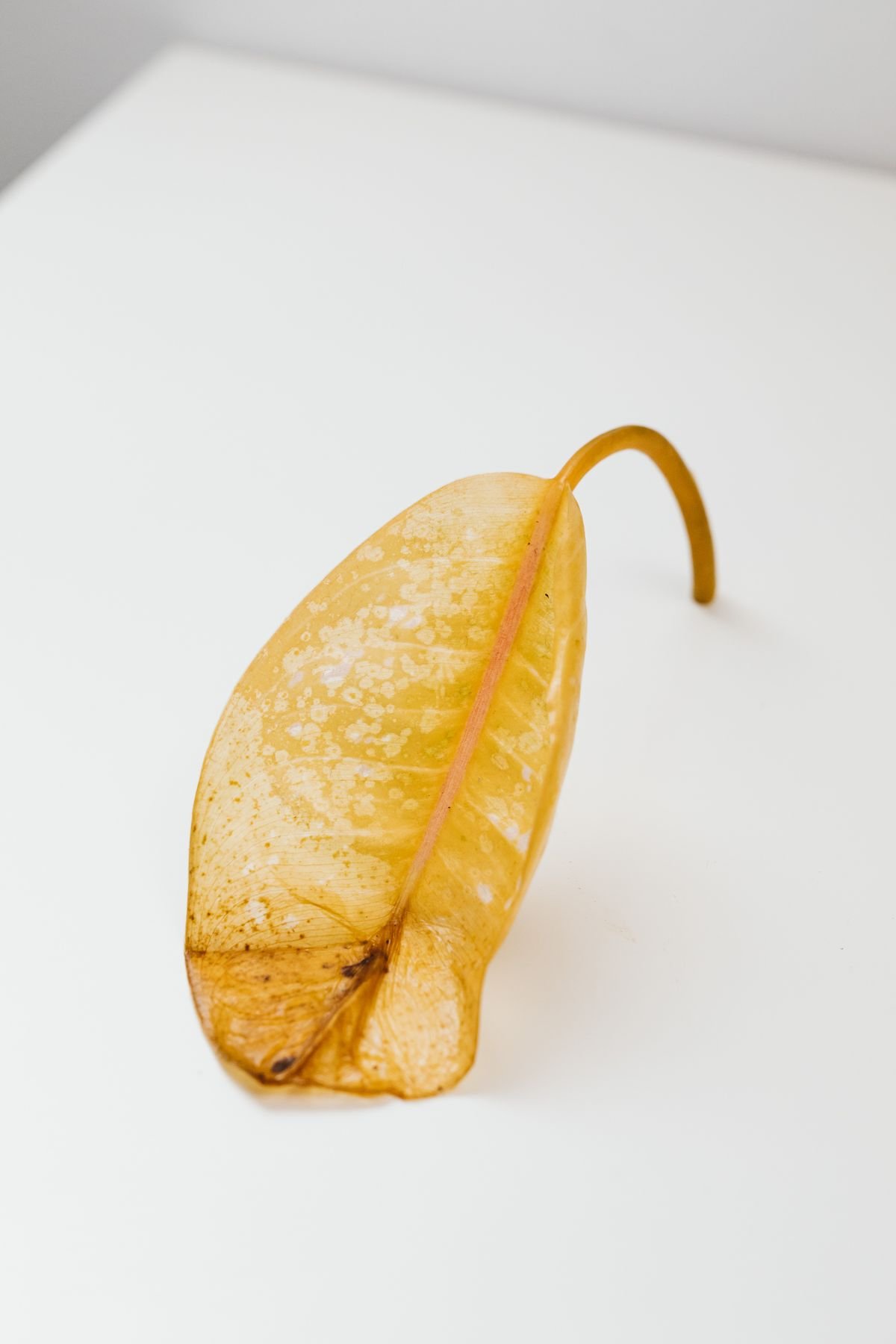
- Curling inward or cupping (concave): the leaf edges roll toward the center, like a little bowl. This is the classic response to dry air and underwatering — the plant reduces its exposed surface to slow down water loss. The RHS notes that plants like prayer plants curl inwards in bright light with dry air.
- Curling downward or outward (convex): leaf margins roll away from the center. Cold, dry conditions commonly cause this, and it can also appear with overwatering or certain pest damage.
- Curling upward at the edges: often linked to heat stress or intense direct sun — the leaf is trying to shade itself.
- Twisted, distorted new growth: new leaves emerging wrinkled or deformed usually point to pests (aphids, thrips) or a virus — check carefully.
Direction alone isn’t a final diagnosis, but it tells you where to look first. The RHS guide to leaf damage on houseplants describes these exact patterns — for example, leaves curling inwards in bright, dry air, or margins curling outwards in cold, dry conditions — and confirms that irregular watering during new-leaf development is another classic trigger for crinkled, creased foliage. Now let’s go through the causes one by one.
The 5 Most Common Causes of Curling Leaves
1. Pests — Check Here First
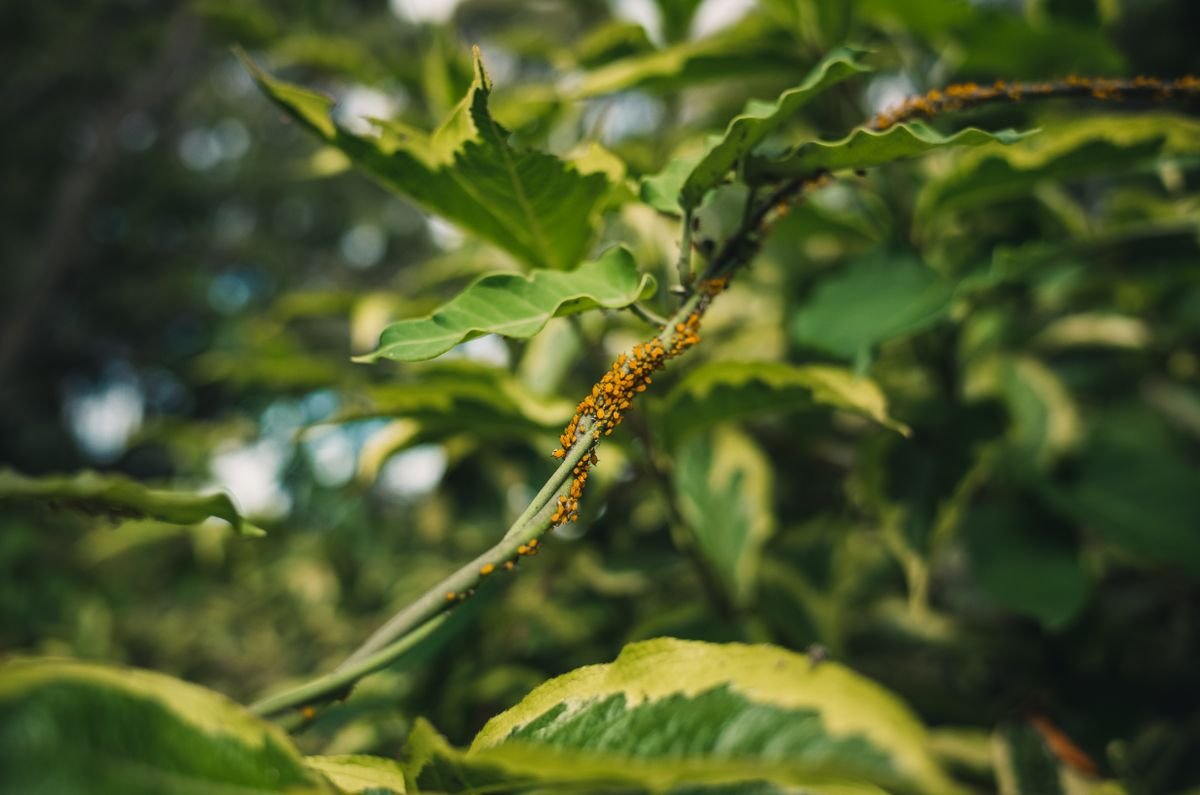
Sap-sucking insects are a top cause of curling, especially when new growth comes out twisted. Aphids, spider mites, thrips, mealybugs, and scale all feed on leaf juices, and the damage shows up as curling, puckering, or distortion. The RHS advises inspecting plants with a hand lens or magnifying glass, since many of these pests are tiny.
- Look at leaf undersides and stem joints — that’s where pests hide.
- Sticky residue (“honeydew”), fine webbing, or tiny white/black dots are giveaways.
- Small infestations: wipe leaves with a damp cloth or a cotton swab dipped in diluted rubbing alcohol.
- For spider mites, a strong shower (lukewarm water) knocks most of them off; repeat weekly.
- Isolate the affected plant so pests don’t spread to neighbors.
2. Dry Air and Low Humidity
Most houseplants are tropical plants that expect humid air. In heated or air-conditioned homes — especially in winter — the air gets very dry, and leaves curl inward to conserve moisture. You may also see brown, crispy leaf tips and edges alongside the curling.
Fixes that actually work:
- Pebble tray: set the pot on a tray of pebbles with water just below the pebble tops. As it evaporates, humidity rises around the plant.
- Group plants together: plants create a slightly more humid microclimate for each other.
- Move away from radiators and heating vents — direct hot, dry air is the worst offender.
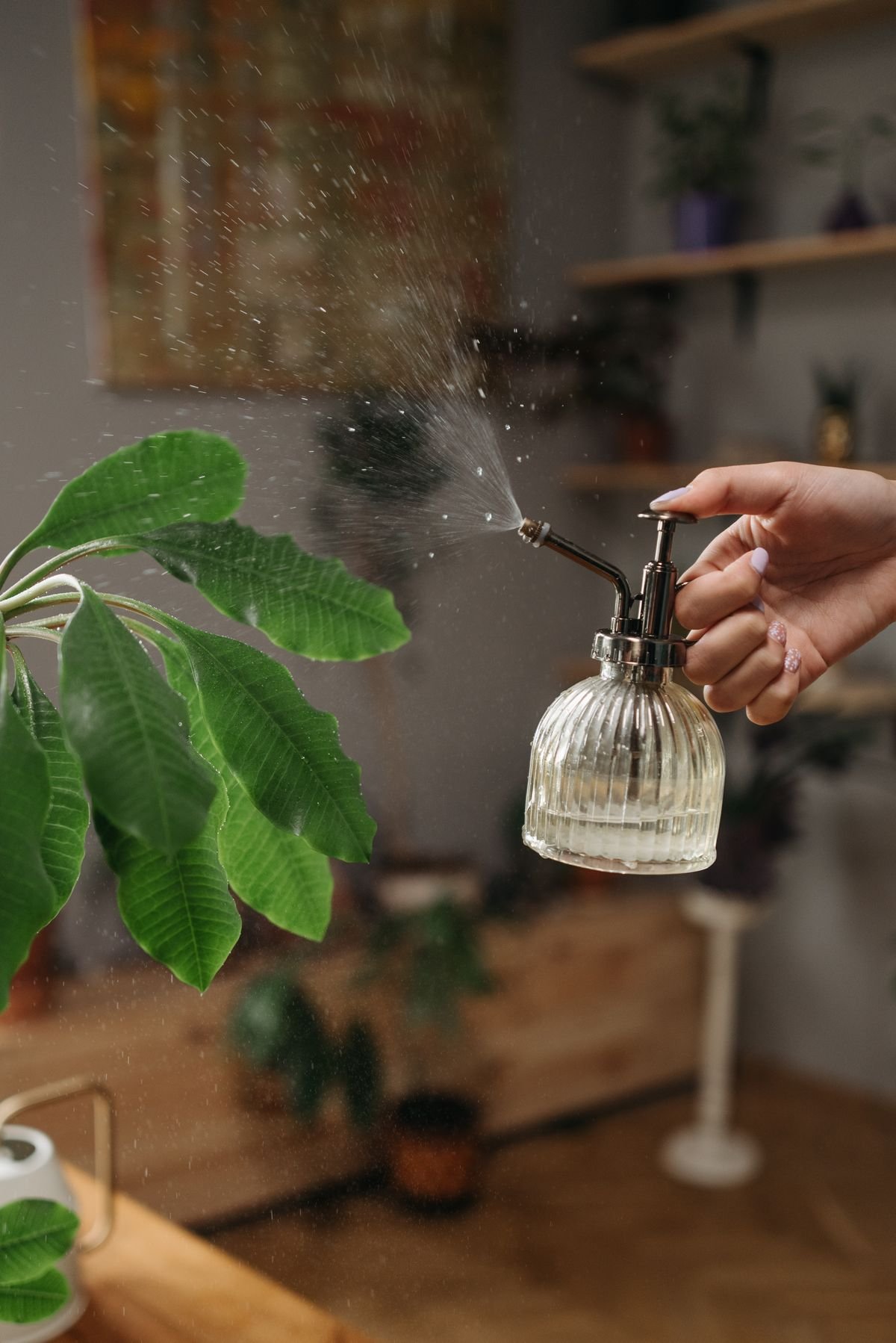
- Mist regularly (a few times a day in very dry rooms), though this is a short-term boost rather than a full solution.
3. Heat Stress and Too Much Sun
Leaves curling upward, bleaching, or going crispy at the edges often mean the plant is too hot or getting scorched by direct sun — common on south-facing windowsills in summer. The leaf is essentially trying to reduce its exposure: by curling upward, it shades its own surface from the harshest rays. You might also notice the soil drying out much faster than usual, which compounds the stress.
Move the plant back from the window or behind a sheer curtain, and make sure the pot isn’t baking on a hot surface like a metal sill or above a radiator. Most houseplants prefer bright indirect light, not a sunbath. After relocating, give the plant a thorough drink (if the soil is dry) and a few days — heat-stressed leaves often relax once temperatures drop, though scorched patches won’t heal.
4. Watering Problems (Both Directions)
Yes, curling can come from too little or too much water. Underwatered plants curl inward as they conserve moisture; overwatered plants may curl downward as roots struggle. Do the finger test — dry an inch down means water thoroughly; soggy means hold off. If watering habits have been irregular (soaked one week, bone dry the next), new leaves may emerge crinkled from the stop-start growth. Aim for consistent, even moisture rather than feast-or-famine watering.
5. Overfertilizing
Too much fertilizer burns roots and causes leaf edges to curl, brown, and crisp — sometimes with a white crust of salts on the soil surface. If you’ve been feeding heavily, flush the soil: water thoroughly until plenty drains out the bottom, let it drain completely, and skip fertilizer for at least a month. When you resume, use half the label’s recommended strength during the growing season only.
Why Are My Plant Leaves Curling and Turning Yellow?
When curling shows up together with yellowing, the usual suspects are overwatering/root problems or pests. Overwatered roots can’t deliver nutrients, so leaves yellow while also curling downward. Check the soil moisture first — if it’s wet, treat it as an overwatering problem (stop watering, improve drainage, check roots). If the soil is fine, inspect closely for pests, since sap-suckers cause both yellowing and distortion. Yellowing that starts on older, lower leaves first leans toward watering or nutrient issues; yellowing on new growth with twisting leans toward pests.
For a deeper dive on the yellow side of things, see why plant leaves turn brown and our yellowing-leaf diagnosis.
Plant-Specific Curling Guides
Curling looks a little different on every plant. These dedicated guides cover the quirks:
- Rubber plant: drooping, falling and curling leaves — big leaves show curling dramatically; usually a humidity or watering issue.
- Tomato plant leaves drooping and curling — outdoor/garden angle: heat, pests, and watering swings.
Frequently Asked Questions
Will curled leaves uncurl again?
Sometimes. Leaves that curled from temporary dryness or underwatering often flatten back out within a day or two of proper watering and humidity. But leaves that curled from pest damage, severe sun scorch, or fertilizer burn usually stay curled — the tissue is permanently deformed. Don’t worry: once you fix the cause, all new growth will come in flat and healthy, which is the real sign of recovery.
Why are my plant leaves curling inward like a taco?
Inward curling (cupping) is the classic sign of dry air or underwatering — the plant is reducing its leaf surface to lose less water. It’s very common in winter when indoor heating dries the air. Raise humidity with a pebble tray or by grouping plants, move the plant away from heat sources, and check that you’re watering thoroughly when the top inch of soil dries out.
Why are my plant leaves curling downward?
Downward or outward curling often points to overwatering, cold drafts, or root problems — the opposite end of the spectrum from inward curling. Check the soil: if it’s soggy, let it dry out and check the roots for rot. Also consider whether the plant sits near a cold window or air-conditioner vent, since cold stress curls leaf margins outward too.
Can pests cause leaves to curl?
Yes — pests are one of the most common causes, especially aphids, spider mites, and thrips. They suck sap from young leaves, which then emerge twisted, puckered, or stunted. Check leaf undersides and new growth with a magnifying glass. Wipe off small infestations with a damp cloth, shower the plant to dislodge spider mites, and isolate it until the problem is gone.
Why are my new leaves curling but old ones are fine?
When only new growth is affected, pests are the prime suspect — they target tender young tissue first. It can also happen after a sudden change (moved the plant, repotted, temperature swing) while new leaves were developing. Inspect for insects first; if the plant is clean, the next flush of growth after conditions stabilize should come in normal.
Leave a Reply